Pastebin.ca
Share text and code with expiry, privacy controls, encryption, and durable short links.
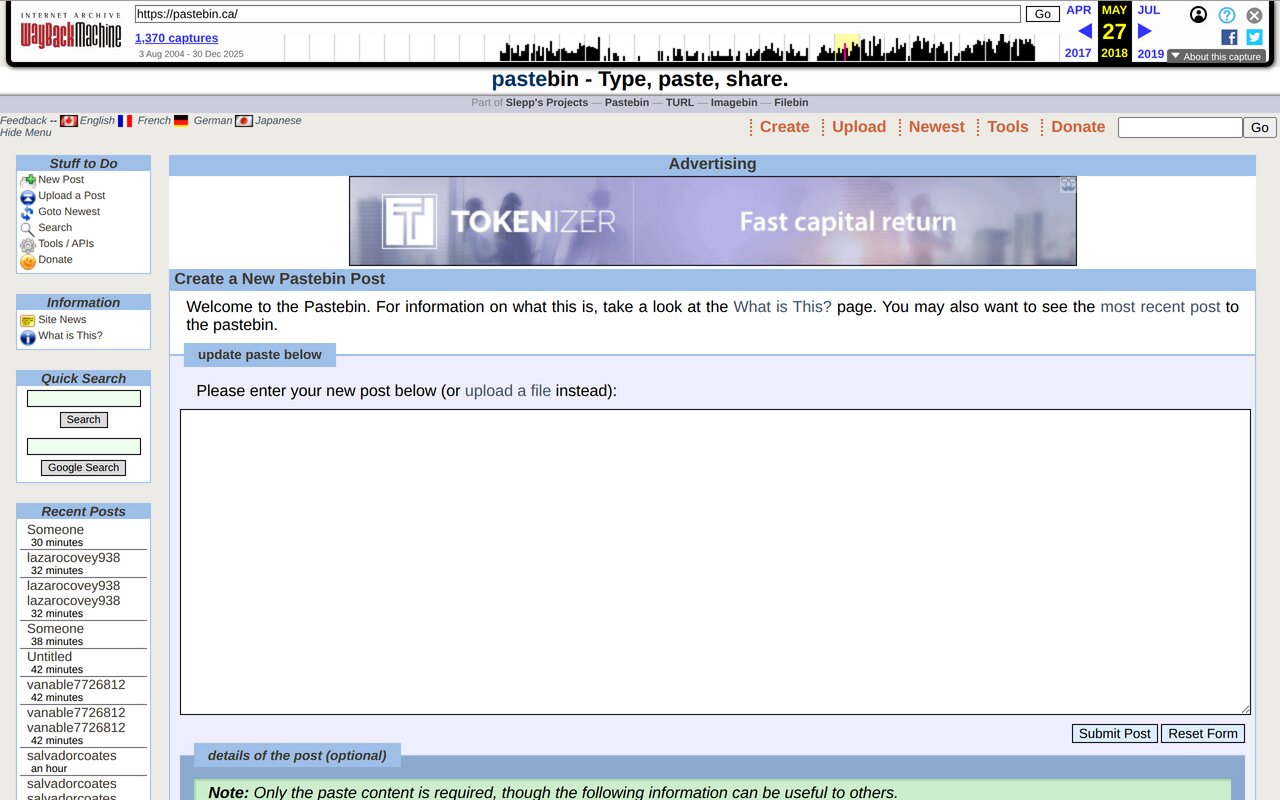
Pastebin.ca puts text or code behind a short link. Pick the syntax, set an expiry anywhere from ten minutes to a year, decide whether the paste is listed publicly or only reachable by URL, and send it. The revocation token is saved in your browser, so an anonymous paste can still be taken down afterwards. Anonymous pastes need an expiry and cannot exceed ninety days.
Beyond the plain case, a paste can be encrypted end-to-end with the key carried in the link, or encrypted to a particular recipient so only that account can open it. There are also read limits, password protection, revisions with a diff between them, forks, an inbox, and a public feed for anything meant to be found. The REST API, the pbca command-line client, and a Model Context Protocol server cover the same ground for scripts and agents.
History and revival
The original launched in July 2004, when the alternative in an IRC channel or a forum thread was pasting a screenful of code into the conversation and hoping. It ran for about fifteen years, at its peak one of Canada’s most-visited websites, and the public archive still counts more than four million publicly readable pastes.
The revival kept that archive instead of starting from an empty database. Legacy numeric paste IDs resolve to their original content where it still exists, and the current service adds passkey accounts, encryption, and the automation tooling. Short links live on pbin.ca, which serves the same pastes from a shorter domain.
The project family
Pastebin.ca is the hub for a set of small, single-purpose services:
- Filebin.ca for files
- Imagebin.ca for images
- Notebin.ca for Markdown notes
- Voicebin.ca for audio clips
- DNSBin.ca for DNS investigation
- TURL.ca for immutable short links
- Attn.ca for personal notifications